Puff sleeve

A sleeve gathered at the armhole and often at a lower band so it stands away from the arm in a puff; related historical forms include gigot or leg-of-mutton sleeves and Juliet sleeves.

How to recognize it

Look for extra fabric at the sleeve cap, pulled in by gathering, pleats, or elastic so the sleeve balloons. Short puffs end in a band on the upper arm. Longer puffs may gather again at the elbow or wrist.

A true puff is full at the top. A gigot or leg-of-mutton sleeve is a related extreme: very wide over the upper arm, then tight from elbow to wrist. A Juliet sleeve keeps a puff at the shoulder and a fitted lower arm.[1]

Origin and history

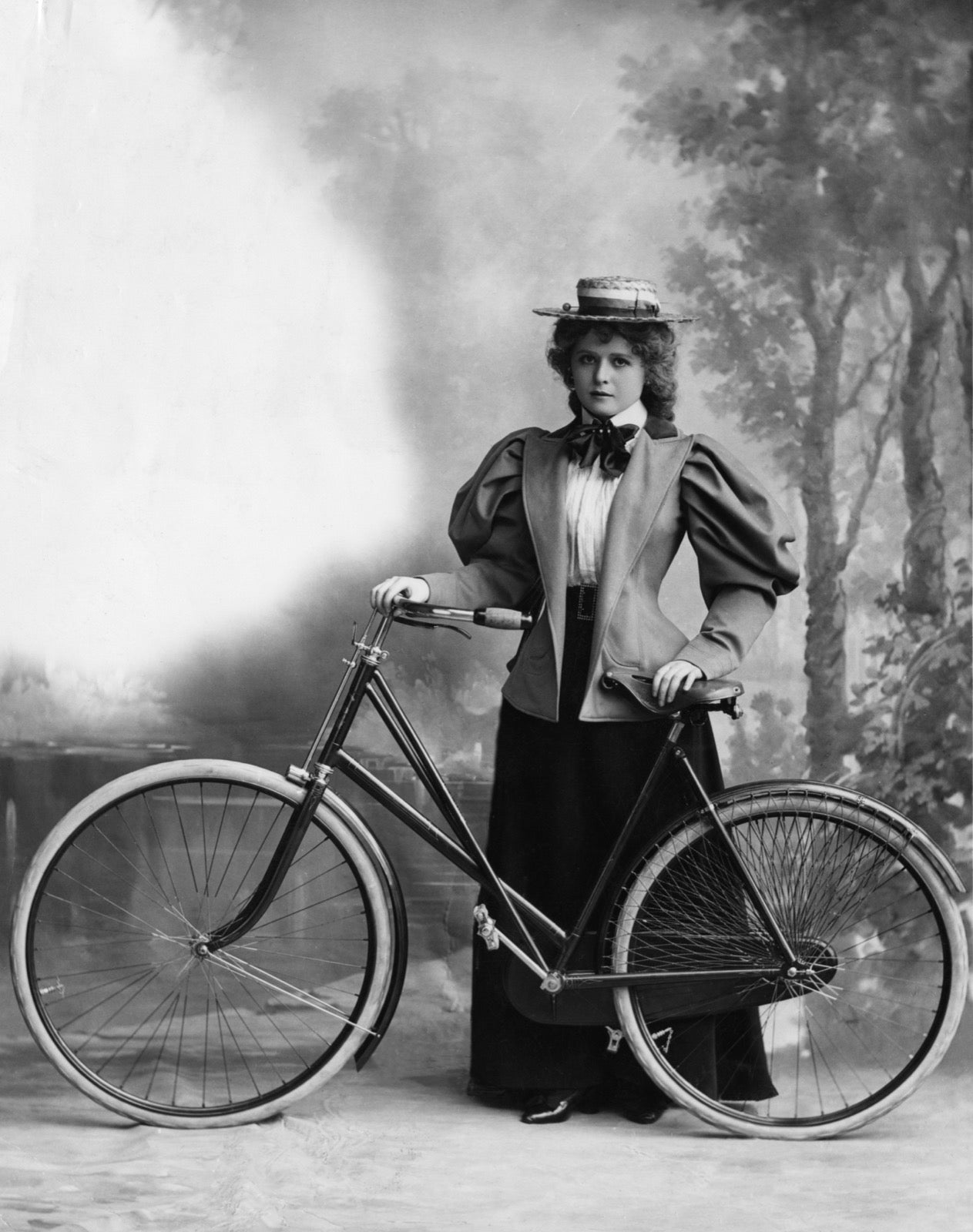
Actress Mabel Love standing with a bicycle, wearing an 1890s dress with large gigot or leg-of-mutton sleeves.
Mabel Love, 1890s. The huge upper sleeves are the gigot or leg-of-mutton extreme of the puff-sleeve family: full above the elbow, tight below.Unknown photographer. Public domain.

Volume at the sleeve is one of the oldest European fashion signals. Renaissance and Tudor dress used paned and puffed upper sleeves, sometimes detachable, so a linen shirt showed through slashes.[1] Seventeenth-century virago sleeves tied a full paned sleeve into two puffs above the elbow.[1]

In the late 1820s and 1830s, women’s sleeves swelled into gigot shapes so large they needed internal sleeve supports. The Metropolitan Museum of Art holds examples from about 1828.[2] Fashion calmed, then returned to huge upper sleeves in the 1890s—the period of surviving photographs of actresses such as Mabel Love in leg-of-mutton dress.[1] The Juliet sleeve, named after Shakespeare’s heroine and revived whenever Renaissance or Empire fashions are quoted (including after Franco Zeffirelli’s 1968 film), is a controlled puff at the cap with a long fitted arm.[1]

Short puffed sleeves never disappeared from children’s clothing or from bridalwear. Late-twentieth-century wedding fashion made short, high-volume puffs a familiar formal look. Twenty-first-century ready-to-wear has repeatedly brought small and oversized puffs back onto blouses and dresses as a period reference that reads immediately in photographs.[1]

Where it is used

Historical court and fashionable dress; children’s wear; folk and dance costume; wedding and bridesmaid dresses; revival fashion; and stage costume.[1]

Everyday applications now are cotton blouses, linen dresses, and knit tops with an elastic cap. Extreme gigot shapes remain mostly period, couture, or editorial.

What is worn now

Editorial styling suggestions from MsDressly—not strict rules.

What is worn now: short gathered puffs on summer dresses and children’s clothes; slightly longer puffs on romantic blouses; bridal gowns with a gathered cap; and occasional runway gigot sleeves.

A small puff adds softness without much heat. A large puff widens the shoulder line and needs a simpler skirt. Elasticated peasant puffs are casual; organza or satin puffs are formal. If the puff collapses, the pattern is under-structured—historical dress used pads or supports for a reason.[2]

How it differs

A cap sleeve has almost no volume and stops at the shoulder. A bishop sleeve is full at the wrist, not necessarily at the cap. A lantern sleeve balloons on the lower arm. Raglan construction can be puffed, but raglan names the seam, not the gather.[1]

Gigot/leg-of-mutton is the long, extreme cousin of the puff: full above, fitted below. Juliet is puff-plus-fitted-long-sleeve.[1]

Expression and impression

Puff sleeves look youthful, romantic, or historically dressed. Small puffs feel sweet. Large puffs feel ceremonial or theatrical. They widen the upper body, so they can balance a full skirt or overwhelm a narrow frame if overscaled.

Common questions

Are puff, gigot, and Juliet the same? They are a family. Puff is the general gathered volume. Gigot/leg-of-mutton is a long sleeve, huge above the elbow and tight below. Juliet is a long sleeve with a puff only at the top.[1]

Why did 1830s sleeves stick out so far? Fashion wanted that silhouette, and women wore sleeve supports underneath to hold the shape.[2]

Is it only for children and weddings? Those are the most persistent settings, but adult daywear regularly revives puffs.[1]

Sources

  1. Sleeve . Wikipedia Historical sleeve types, including cap, puff, gigot/leg-o’-mutton, Juliet, and raglan constructions.
  2. Sleeve supports, ca. 1828 . The Metropolitan Museum of Art Museum object documenting understructures used to hold 1820s puffed and gigot sleeves in shape.
  3. File:Short puffed sleeve.jpg . Wikimedia Commons Europeana Fashion / MoMu drawing of a short puffed sleeve; CC0.
  4. File:Mabel Love with a bicycle.jpg . Wikimedia Commons Public-domain photograph of actress Mabel Love in 1890s leg-of-mutton sleeves.

September 18, 2026